




Portable Urinals for Runners: Train Smarter, Race Cleaner
By Dr. Valerie Ulene, Co-Founder, Boom Essentials
Key Takeaways
-
Urinary urgency and stress incontinence affect up to 1 in 3 female runners, and it's far more common than the running community openly acknowledges.
-
Bathroom breaks during marathons can cost six or more minutes of race time, and pre-race port-a-potty lines are a major source of stress that disrupt warm-up routines.
-
Portable urinals offer a private, clean, reusable alternative to port-a-potties.
-
Pelvic floor strengthening, hydration timing, and caffeine management can meaningfully reduce urgency, but they don't eliminate the need for a practical backup plan.
-
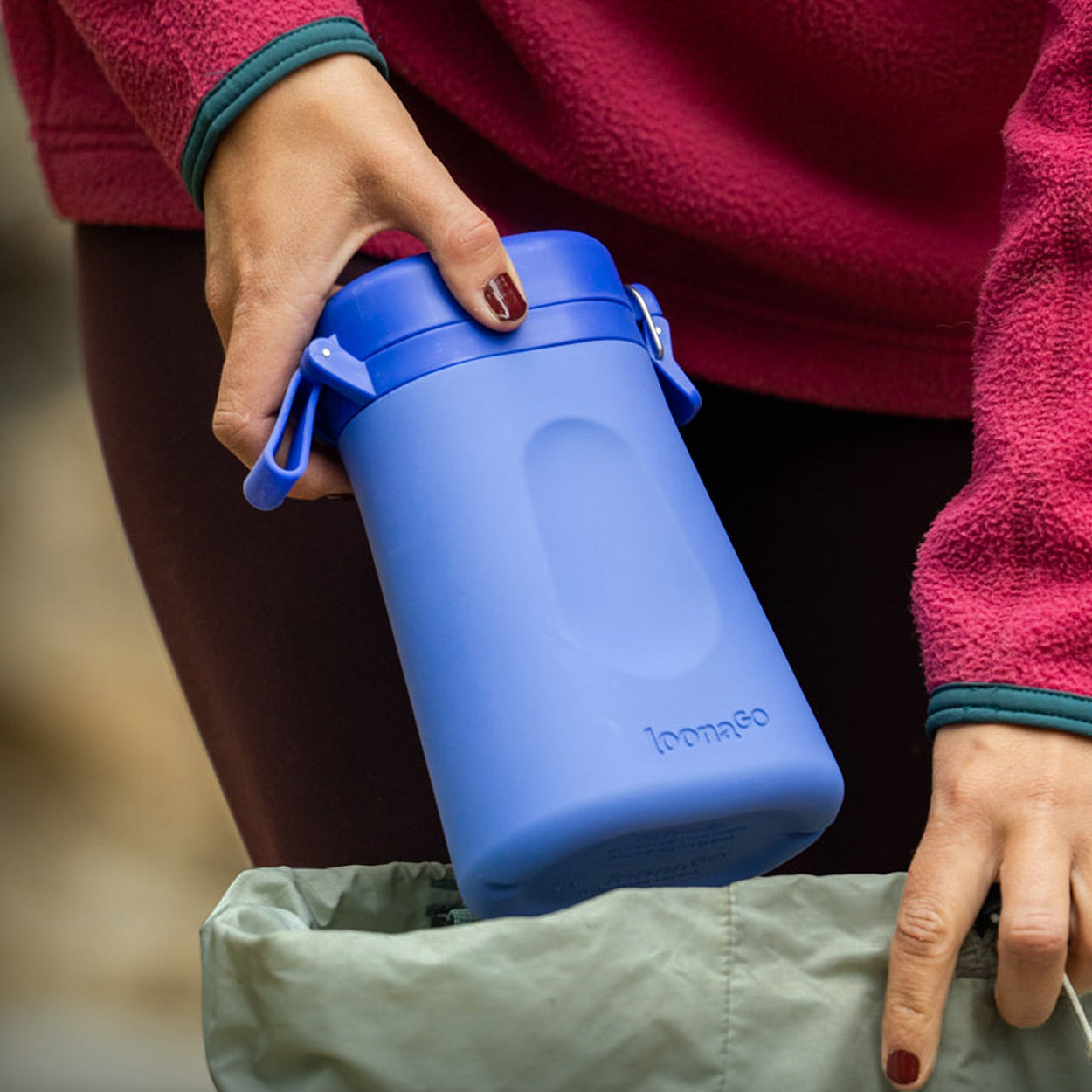
LoonaGo (designed for female anatomy) and Tanker (designed for male anatomy) give runners a clean, portable alternative to port-a-potties. No lines, no mess, no missing your start time.
-
Both LoonaGo and Tanker are FSA/HSA eligible, spill-proof, and designed by HERBST Produkt, the industrial design firm behind Brita.
The Bathroom Problem Runners Don't Talk About
There's an unspoken ritual at every road race: a frantic dash to the port-a-potties minutes before the gun goes off.
Bladder issues are one of the sport's most common and least discussed challenges. Research shows that exercise-induced urinary incontinence is widespread among female runners. In fact, a 2023 review of recreational female runners found that about 1 in 6 women experience urinary incontinence while running. A study of 112 elite female athletes found a much higher prevalence – 45% reported suffering from urinary incontinence. Even women who never experience leakage often report urgency: that sudden, hard-to-ignore need to go that has nothing to do with how much water they drank.
And, despite what some believe, male runners aren't immune to urinary incontinence. The constant, repetitive impact of running fatigues the muscles of the pelvic floor (yes, men have a pelvic floor too) and can lead to leaks.
Urinary incontinence isn’t something most runners talk openly about. They find it embarrassing to acknowledge and simply learn to work around bladder issues as best they can. They come up with creative hacks and work arounds to deal with leaks. For example, some runners wear dark fabrics or moisture-wicking materials to make minor leakage less noticeable, while others use absorbent liners or athletic underwear, particularly for longer runs.
In reality, running is a high-impact sport with well-understood effects on the bladder. Needing a thoughtful bathroom strategy isn’t unusual; it’s simply part of how the body responds to the demands of the sport.
The Science: Why Running Triggers Bladder Urgency
With each stride, running generates ground reaction forces of 1.5 to 2.5 times body weight, and a significant portion of that force is transmitted directly to the pelvic floor. The pelvic floor is a sling-shaped group of muscles and connective tissues that supports the bladder, reproductive organs, and rectum. During running, the pelvic muscles contract repeatedly and, with time and distance, become fatigued. Ultimately, this can lead to stress urinary incontinence.
A 2023 study published in the International Urogynecology Journal confirmed that running strains the tissues of the female pelvic floor — and importantly, this strain accumulates over the course of a run. That's why exercise-induced stress urinary incontinence occurs more frequently in the middle or end of training sessions, not at the start. You may be fine at mile 2 and struggling at mile 10.
Several factors increase risk:
-
Parity (number of vaginal deliveries).
-
Age. Women in the perimenopausal and menopausal age range tend to be particularly susceptible.
-
High effort running. Women who train at high intensity are more likely to experience pelvic floor dysfunction and urinary incontinence than moderate-effort runners.
-
Caffeine intake before runs.
Prevention Strategies
The good news is that several evidence-based strategies can meaningfully reduce urgency and incontinence during runs. None of them are magic bullets, but together they can make a real difference.
Pelvic Floor Training
Kegel exercises remain the gold standard, but a comprehensive pelvic floor training program goes further. Exercises like bridges, clamshells, split squats, and Romanian deadlifts help strengthen all of the muscles that support the pelvic floor. For some people, particularly runners logging high weekly mileage, working with a pelvic floor physical therapist may also be worthwhile.
Hydration Timing
Staying well hydrated throughout the day and then tapering fluid intake in the 60 to 90 minutes before a run or race start is more effective than restricting fluids entirely. Dehydration actually irritates the bladder and can worsen urgency. The goal is a steady state, not a bolus of water 20 minutes before the gun.
Caffeine Management
Caffeine is both a performance enhancer and a diuretic. It reaches peak levels in the blood around 45 minutes after it’s consumed, which means timing matters. If you take a pre-race gel or coffee, plan your pre-race bathroom stop accordingly. Caffeine also increases bladder irritability in some runners, so experimenting with lower doses or switching to non-caffeinated energy sources during training is worth testing.
Running Form Adjustments
A slight forward lean, increased cadence, and consciously "running softer" can all reduce the impact transmitted to the pelvic floor per stride. These adjustments are particularly relevant for heel strikers, who generate more force than midfoot or forefoot strikers.
Bladder Training
Avoid rushing to the bathroom the moment you feel the urge to urinate. The initial sensation to void often occurs when the bladder is only partially full, and immediately responding to this sensation may train the bladder to signal the need to urinate more frequently. Over time, this can contribute to urinary urgency and increased daytime frequency. Learning to comfortably delay urination for short periods, when appropriate, can help improve bladder capacity and promote better bladder control.
That being said, it’s important not to allow your bladder to overfill. Regularly allowing the bladder to become overfilled places excessive strain on the bladder muscles. Over time, this may reduce the bladder's ability to contract effectively, making it more difficult to fully empty during urination.
Pre-Race Bathroom Routine
Eating at least 3 hours before race start and completing a pre-race bathroom routine before you reach the starting corral gives your gastrointestinal system and bladder time to stabilize. The challenge is that race-morning logistics often compress this window. That's exactly where a portable urinal becomes a genuinely great tool and not simply a novelty.
Why Port-a-Potties Are Not Ideal
Port-a-potties are the default answer to on-the-go bathroom needs at races, but they're inadequate in almost every respect.
According to Runner's World, one runner reported that four bathroom stops added six or more minutes to her marathon time. That's six minutes that had nothing to do with fitness, pacing, or preparation. The recommended ratio of port-a-potties to runners is roughly 1 potty per 10 participants, a standard many races fail to meet, particularly at start areas where demand spikes in the 30 minutes before the gun.
The lines at pre-race corrals are a particular problem. Standing in a port-a-potty queue when you should be warming up, mentally preparing, and settling your nerves adds unnecessary stress to race day. Some runners skip the line entirely and simply accept the discomfort of a full bladder; others waste hard-earned minutes mid-race at crowded aid station facilities.
Even when they're available, port-a-potties come with a familiar set of problems: by mid-race, they’re dirty and, you can be pretty sure that, by mile 15 there will be no toilet paper in sight. They’re also dark inside and the floors are often wet and slippery. Needless to say, no one really wants to emerge from a smelly plastic box back into a crowd of thousands of people. Bottom line: Port-a-potties are designed for construction sites and have been retrofitted for races. The fit isn't great.
Some larger races have begun adding "privacy urinals" (the Boston Marathon is one notable example), but, for the majority of runners at the majority of races, the port-a-potty remains the only official option.
Portable Urinals as a Performance Accessory
The mental shift that runners need to make is straightforward: stop thinking of urinals as medical equipment and start thinking of them as gear.
Serious runners obsess over carbon-fiber plates, gel intake, and compression socks. A bathroom strategy that saves 6 minutes and eliminates pre-race stress is a higher-return investment than most of the gear decisions runners agonize over.
A portable urinal gives you control over something that has historically been out of your hands. You can use it in the car on the way to a destination race. No more asking the driver to detour to a gas station at 5 AM. You can use it in your hotel room the morning of the race so you arrive at the start ready to run. You can keep it accessible during training runs where public restrooms aren't available. For runners who travel for races, it belongs in their kit the same way Body Glide and compression sleeves do.
The running community includes millions of people who have organized their lives around training and racing, and a significant portion of them are regularly inconvenienced by bathroom logistics. Until now, there just haven't been good products to support them.
What to Look for in a Portable Urinal
Not every portable urinal is built for the demands of running and travel. Here's what actually matters when you're evaluating options for race-day use:
Seal reliability. A urinal that leaks in a gym bag or race pack is worse than useless. Look for engineered locking mechanisms, not just a push-on cap.
Capacity. Enough volume to handle a full use without risk of overflow. For women, 20–24 oz is typically sufficient. For men, 32–44 oz generally does the trick.
Portability. A compact profile that fits in a gear bag, car door pocket, or hydration pack side pouch.
Ease of cleaning. Reusable urinals should be cleanable with soap and water in under a minute. Dishwasher-safe is a bonus.
Design. This matters more than it sounds. If the product looks like it belongs in a hospital, using it when you're out in the world becomes far less appealing. A urinal that looks like a water bottle or piece of outdoor gear removes some of the psychological friction using it.
LoonaGo vs. Tanker: Side-by-Side
|
LoonaGo |
Tanker |
|
|---|---|---|
|
Designed for |
Female anatomy |
Male anatomy |
|
Capacity |
24 oz |
44 oz |
|
Seal Mechanism |
Latch & Lock (leak-proof) |
Twist-Lock |
|
Profile |
Compact, sleek, bottle-like |
Flat, ergonomic, engineered for elements |
|
Colors |
Cobalt Blue, Seafoam Green |
Cement Grey, Khaki Green |
|
Best for |
Race morning, training runs, car trips, hotel room |
Race morning, training runs, car trips, hotel room, plus higher capacity needs |
|
FSA/HSA Eligible |
Yes |
Yes |
Both products were designed by HERBST Produkt, the industrial design firm behind the Brita water filtration system and Loona, a Boom Essentials urinal that has won three of the most competitive awards in product design--the Red Dot, the Edison, and the iF Design awards.
Neither LoonaGo or Tanker look like a medical device. LoonaGo looks like something you'd expect to find on the shelves at REI and Tanker looks like a piece of outdoor gear.
Both products are available at boomessentials.com, Amazon, Target, and Walmart.
How to Use a Portable Urinal Before, During, and After Races
The most common question we get: "When would I even use this during race week?" Here are the scenarios:
Race Morning
Keep LoonaGo or Tanker in your hotel room or car. Use it at your own pace on race morning: no lines, no stress, no strangers. This is arguably the highest-value use case: arriving at the start area with an empty bladder lets you focus on your warm-up and race plan instead of scanning for facilities.
Pre-Race Corral
If you need to go again while waiting in the corral (common, given race-day adrenaline), having a portable urinal in your gear bag gives you an option that doesn't require leaving your corral position. This is especially useful for wave starts where your position matters and walking back to port-a-potties could mean a 10-minute delay.
Training Runs
On long training runs through areas without public restrooms, a portable urinal in a hydration vest side pocket or stashed at a known landmark lets you run without restriction.
The Drive to Destination Races
If you're traveling to a race and hitting the road at 4 or 5 AM, a portable urinal means one less stop on a route where a lot of convenience stores aren't yet open. This is the kind of detail that sounds small until you're stuck in a turnpike rest stop 90 minutes before your corral closes.
Post-Use Cleanup
Boom Personal Wipes ($6.95 for a 60-count resealable pack) are hypoallergenic, unscented, and infused with aloe and chamomile. They're a clean companion for LoonaGo or Tanker. Toss a few in a zip-lock bag in your gear kit and you're covered for post-use cleanup without needing to find a sink.
Cleaning the urinal itself takes under a minute with soap and water. Tanker has been reported by customers to be dishwasher safe. After a race, rinse at the finish line festival area or wait until you're back at the hotel.
The Runner's Race-Day Bathroom Kit
Here's what a complete race-week bathroom kit looks like:
|
Item |
Why You Need It |
|---|---|
|
Your primary backup for when port-a-potty lines are long, facilities are disgusting, or you need to go before they're open |
|
|
Unscented, hypoallergenic wipes with aloe and chamomile. Pairs with LoonaGo or Tanker, or use alone for freshening up ($6.95) |
|
|
Hand sanitizer |
For any port-a-potty visit where soap is absent (which is most of the time) |
|
Extra toilet paper / tissues |
Never rely on race organizers to keep stalls stocked past mile 10 |
|
Ziplock bags |
For storing used wipes and keeping your gear bag clean |
Frequently Asked Questions
How do I deal with needing to pee during a marathon?
The most effective strategies are layered: build a solid pre-race routine (bathroom stop 30–60 minutes before start, not right at the corral), train your pelvic floor in the months leading up to the race, and manage caffeine timing on race day. If you do need to stop mid-race, designated race facilities at aid stations are faster than off-course stops. For runners who want a backup option that doesn't depend on race infrastructure, a portable urinal like the LoonaGo or Tanker used before the race removes most of the pressure.
Are portable urinals FSA eligible?
Yes. Boom's LoonaGo and Tanker are both FSA and HSA eligible, as are Boom Personal Wipes. Using pre-tax FSA/HSA funds effectively reduces the out-of-pocket cost. Always confirm specific eligibility with your benefit coordinator.
Why do I feel like I need to pee when I run?
Several factors contribute: the repeated impact of running increases pressue in the abdomen area and stresses the pelvic floor, adrenaline stimulates the urge to void, and caffeine amplifies bladder irritability. Longer and higher-effort runs tend to worsen urgency because pelvic floor muscles fatigue over time. This is physiologically normal and doesn't necessarily indicate a medical problem, though persistent or severe symptoms are worth discussing with a health care professional.
What is stress urinary incontinence in runners?
Stress urinary incontinence is the involuntary leakage of urine during physical exertion. In the context of running, that means during the impact phase of a stride. incontinence is caused by pressure in the abdomen exceeding what the pelvic floor and urethral sphincter can contain. Among elite female athletes, nearly 46% report stress urinary incontinece symptoms during running. It's the most common form of exercise-induced incontinence and is highly responsive to pelvic floor training.
How do you clean a portable urinal?
Rinse with soap and water immediately after use. Most portable urinals, including the Boom LoonaGo and Tanker, are fully reusable and can be cleaned in under a minute. The Tanker has been confirmed dishwasher safe by customers. For on-the-go cleanup between a full wash, Boom Personal Wipes work well.
What's the best portable urinal for women who run?
LoonaGo is purpose-built for on-the-go use: compact profile, 24 oz capacity, leak-proof Latch & Lock mechanism, and a contoured silicone funnel designed for female anatomy. It fits in a gear bag, a car door pocket, or a hydration vest pocket. It's available in Cobalt Blue and Seafoam Green, FSA/HSA eligible, and retails for $39.95 at Target, Amazon, Walmart, and boomessentials.com.
How do port-a-potties at races compare to using a portable urinal?
Port-a-potties require waiting in line (often at the worst possible time, right before a race start), are often filthy, and can cost runners precious time. A portable urinal used before a race gives you complete control: no line, no wait, done on your schedule. The tradeoff is that you need to manage disposal, which requires a toilet or appropriate receptacle, making it primarily a pre-race and training tool rather than a mid-race solution.
Can men use portable urinals for running?
Yes. Tanker is designed for male anatomy, with a 44 oz capacity, flat ergonomic profile, and a quarter-turn Twist-Lock lid for a water-tight seal. It's particularly useful for long drives to destination races, training runs without nearby facilities, and race-morning logistics. Like the LoonaGo, it's FSA/HSA eligible at $39.95.
Do pelvic floor exercises actually help with running incontinence?
Yes, and the evidence is strong. Targeted pelvic floor training (including Kegels, bridges, clamshells, and compound movements like Romanian deadlifts) can significantly reduce or eliminate exercise-induced stress urinary incontinence. The key is doing the exercises consistently and, ideally, working with a pelvic floor physical therapist to ensure correct technique. Results typically take 8 to 12 weeks of regular training to become noticeable.
Where can I buy the Boom LoonaGo or Tanker?
Both are available at Target, Amazon, Walmart, and directly at boomessentials.com. The website also offers bundle options and multi-pack savings.
Sources:
POGO Physio: Running, Pelvic Floor & Incontinence | Aeroflow Urology: Tips to Prevent Peeing While Running | International Urogynecology Journal: Acute Effects of Running on Pelvic Floor | Runner's World: Pee Breaks During Marathon | Gotta Go Rentals: Portable Toilet Tips for Race Directors | Run to the Finish: Peeing While Running | Outside: Why It Happens | Red Dot Design Award: Loona | Boom Essentials
