




Why We Created Loona: The Problem 50 Million Americans Face Every Night
By Dr. Valerie Ulene, Co-Founder, Boom Essentials
Key Takeaways
-
Nocturia — waking up multiple times a night to urinate — affects roughly 50 million Americans, and women are disproportionately impacted due to pregnancy, menopause, and pelvic floor changes.
-
The only bedside urinals available were designed for men, looked clinical, and lacked basic features like caps — leaving women with no dignified option.
-
Loona was created to fill that gap: the first personal portable urinal designed specifically for female anatomy, with a spill-proof cap, ergonomic shape, and a modern look in three designer colors.
-
Designed by HERBST Produkt (the firm behind Brita) and winner of a Red Dot Design Award, Loona was built to sit on your nightstand — not hide in a closet.
-
Beyond nocturia, women use Loona for road trips, camping, festivals, post-surgery recovery, pregnancy, and anywhere clean bathroom access is limited.
It Started with a Problem Women Know Too Well
I am a physician with more than 30 years of experience in preventive medicine. So when I started waking up multiple times a night to use the bathroom, I did what any doctor would do — I went to the research.
The condition is called nocturia. It affects roughly 50 million Americans, but what many people don’t realize is that women face it differently. Pregnancy, childbirth, hormonal shifts during menopause, and pelvic floor changes all increase the likelihood of nighttime urination. For many women, it’s not a phase — it’s a recurring reality that fragments sleep, increases fall risk, and quietly erodes quality of life.
The common behavioral strategies — reducing evening fluids, leg elevation, pelvic floor exercises — help some women, but they rarely eliminate the problem.
Medications exist, but they carry side effects and produce inconsistent results.
And at the end of paper after paper, the same recommendation appeared: “Tell your patients to use a bedside urinal.”
The clinical logic was sound. A bedside urinal means no stumbling in the dark, no turning on lights, no waking a partner, and a faster return to sleep. But when I searched for one designed for women, what I found was unacceptable.
Why Nothing on the Market Worked for Women
Every bedside urinal I could find had the same problems:
-
Designed for male anatomy. The vast majority of urinals are shaped for men. Women were expected to make do with a product that was never built for them.
-
Clinical, institutional appearance. Translucent plastic jugs that look like hospital supply closet inventory. The thought of placing one on a nightstand felt like advertising that something was wrong.
-
No caps or spill protection. Many urinals are open-top, meaning they can spill on your nightstand, your floor, or during transport. For a product meant to sit beside your bed, that is a basic design failure.
-
No consideration for dignity. Every product on the market reinforced the message that needing help with bathroom access is something to be embarrassed about.
The medical recommendation was right. The products fulfilling it were failing women.
How Loona Was Designed — From the Ground Up, for Women
I brought this problem to my business partner, Byrdie Lifson Pompan. Byrdie and I had co-founded Clear Health Advisors over a decade earlier, and we had both seen firsthand how the healthcare system often solves the clinical problem while ignoring the human experience around it. When I showed Byrdie the state of bedside urinals for women, her response was immediate — she was dealing with the exact same issue at home.
We partnered with HERBST Produkt, the industrial design firm behind Brita and Molekule, and gave them a simple brief: design a product that a woman would be proud to have on her nightstand.
The Three Design Priorities Behind Loona
|
Design Priority |
What It Means |
|
Anatomy-First Ergonomics |
Loona’s soft contoured funnel was designed from the start for female anatomy — not adapted from a male product. It aligns naturally and comfortably. |
|
Spill-Proof Engineering |
Loona’s lid snaps closed to keep liquid securely inside. No open-top designs, no risk of spills on your nightstand or in a travel bag. |
|
Nightstand-Worthy Aesthetic |
Available in three designer colors (Loona Blue, Coral Dream, Moon Grey), Loona looks like a modern home product. It sits on a nightstand without announcing itself. |
Loona went on to win a Red Dot Design Award — one of the most recognized honors in international product design. But the recognition that mattered most came from the women using it.
When Women Actually Use Loona
We created Loona for nighttime. What women taught us is that the need extends far beyond the bedroom.
Common Use Cases
|
Situation |
Why Loona Helps |
|
Nighttime urges (nocturia) |
Eliminates the need to get out of bed, turn on lights, or walk to the bathroom in the dark. Reduces fall risk and helps you return to sleep faster. |
|
Post-surgery recovery |
After a C-section, hip replacement, or any procedure that limits mobility, Loona provides relief without the pain of getting to a bathroom. |
|
Pregnancy |
Frequent urination during pregnancy — especially in the third trimester — means constant nighttime trips. Loona keeps you in bed and resting. |
|
Road trips & travel |
When the next rest stop is an hour away or the only option is a gas station restroom, Loona gives you a clean, private alternative. |
|
Camping & hiking |
No more trekking to a distant restroom in the dark or squatting in the woods. Loona is lightweight and packs easily. |
|
Festivals & outdoor events |
Long lines, unsanitary portable restrooms, and limited access. Loona is discreet, portable, and solves the problem without the wait. |
The common thread is not a single diagnosis. It’s a universal experience women face: needing to go when a bathroom isn’t accessible, convenient, or safe — and deserving a solution that doesn’t make you feel diminished for needing one.
What Makes Loona Different from Other Female Urinals
There are a handful of female urinals on the market now. Here is how Loona compares on the features that matter most:
Loona vs. Traditional Female Urinals
|
Feature |
Loona |
Traditional Urinals |
|
Designed for female anatomy |
Yes — ergonomic contoured funnel designed from scratch for women |
Often unisex or adapted from male designs |
|
Spill-proof cap |
Yes — snap-close lid keeps liquid sealed |
Many have no cap or loose-fitting lids |
|
Aesthetic design |
3 designer colors; designed by HERBST Produkt (Brita, Molekule) |
Clinical/translucent plastic; institutional appearance |
|
Design awards |
Red Dot Design Award winner |
None |
|
Easy to clean |
Yes — just swish with soap & water and dry |
Varies; some have hard-to-reach interiors |
|
Travel-friendly |
Yes — compact, lightweight, sealed |
Often bulky or not designed for portability |
The True Reason Loona Exists
People sometimes ask whether Loona is a medical product. The honest answer is that it solves a problem medicine identified, but it is not a medical device. It is a personal care product designed for real life.
Loona exists because the gap between medical recommendation and a great product experience was enormous — and nobody was closing it for women.
Physicians were telling women to use a bedside urinal. Women were looking at what was available — plastic jugs designed for men, with no caps, no thought given to comfort or aesthetics — and deciding they’d rather suffer. That is not a failure of medicine. It is a failure of product design. A failure to recognize that how a product makes you feel is inseparable from whether you’ll actually use it.
Loona was designed to close that gap. To take a clinically sound recommendation and deliver it in a form that women are genuinely willing to use. A form that sits on a nightstand without shame. A form that fits in a travel bag without embarrassment. A form that says: this was made for you.
That is why we created Loona. And based on what we’ve heard from thousands of women now using it, it was worth every late night getting it right.
Loona Was Just the Beginning
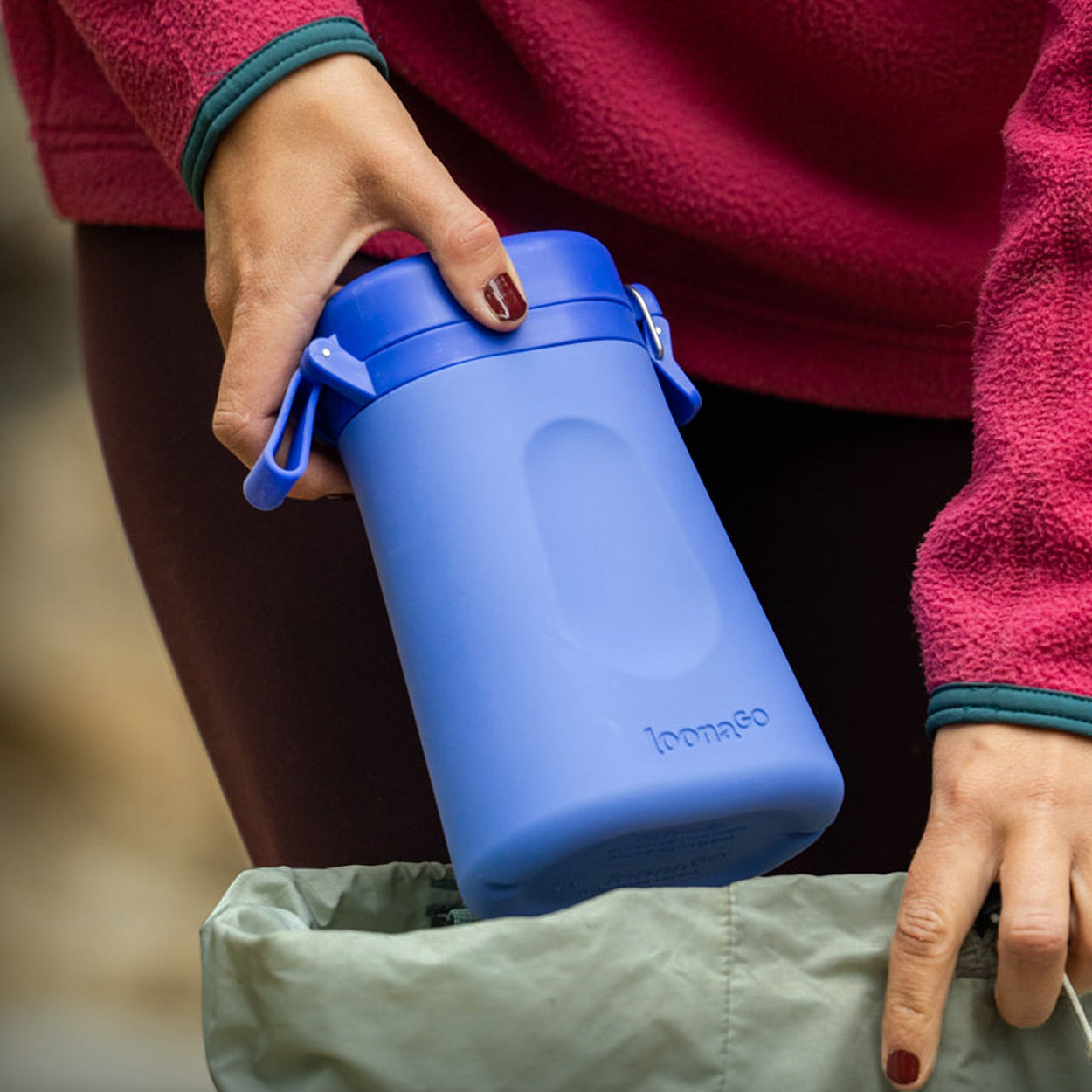
What Loona taught us shaped everything that followed. It’s why we created LoonaGo — a compact version built for life on the go and Boom Personal Wipes as a gentle companion product. Every product in the Boom Home Medical lineup traces back to the same principle Loona proved: women will embrace practical health solutions — as long as those solutions respect who they are.
Frequently Asked Questions
Why was Loona created?
Loona was created because the only bedside urinals available were designed for men, looked clinical, and lacked basic features like spill-proof caps. Co-founders Dr. Valerie Ulene and Byrdie Lifson Pompan set out to design the first personal urinal built specifically for female anatomy — one that solved the problem without sacrificing dignity.
What is Loona and who is it designed for?
Loona is a personal portable urinal designed for anyone with female anatomy. It features an ergonomic contoured funnel, a snap-close spill-proof cap, and a modern design in three colors (Loona Blue, Coral Dream, Moon Grey). It’s used by women managing nocturia, recovering from surgery, experiencing pregnancy, traveling, camping, or attending outdoor events.
Is Loona only for older women or women with medical conditions?
Not at all. While nocturia is more common with age, Loona is used by women of all ages — including pregnant women, road trippers, campers, hikers, festival-goers, and anyone who wants a clean, private alternative when bathrooms aren’t accessible.
Who designed Loona?
Loona was designed by HERBST Produkt, the industrial design firm behind Brita and Molekule. It won a Red Dot Design Award for its human-centered approach to a product category that had seen virtually no innovation in decades.
How much does Loona cost and where can I buy it?
A single Loona is $39.95, available at boomhomemedical.com and on Amazon. Bundles include Loona + Wipes (from $44.00), Loona + LoonaGo ($79.90), and Loona + Tanker ($67.90–$79.90).
Sources:
Sleep Foundation — Nocturia | StatPearls — Nocturia (NCBI) | Red Dot Design Award — Loona | HME News — Boom Launch | SHOUTOUT LA — Founder Interview | Boom Home Medical
